
Every Child Deserves to Be Heard
Imagine having thoughts, feelings, ideas, and dreams but struggling to express them in ways others can easily understand.
For many autistic individuals, communication can be one of the most significant challenges they face—not because they lack intelligence or understanding, but because the world is often designed around communication styles that do not reflect their unique needs.
At SoroTech, we believe that every child deserves the opportunity to communicate, learn, and participate fully in society. Supporting autistic individuals is not just about providing assistance; it is about creating environments, technologies, and opportunities that allow them to thrive.
Understanding Autism
Autism Spectrum Disorder (ASD) is a neurodevelopmental condition that affects how individuals communicate, interact, learn, and experience the world around them.
Autism is called a spectrum because every autistic individual is different. Some communicate verbally, while others may use gestures, visual aids, communication devices, or alternative methods to express themselves.
Autistic individuals may experience:
- Differences in communication and social interaction
- Sensory sensitivities to sounds, lights, textures, or environments
- Strong interests in specific subjects or activities
- Unique learning styles and problem-solving abilities
- Challenges with adapting to changes in routine
Most importantly, autism is not something that needs to be “fixed.” Instead, individuals need understanding, acceptance, and appropriate support systems that help them reach their full potential.
The Communication Challenge
Communication is one of the foundations of human connection.
It enables learning, builds relationships, supports emotional expression, and creates opportunities for participation in everyday life.
For many autistic children, communication barriers can lead to:
- Frustration and anxiety
- Difficulty expressing needs and emotions
- Social isolation
- Challenges in classroom participation
- Misunderstandings between children, parents, teachers, and caregivers
When communication barriers persist, children may miss opportunities to learn, connect, and grow with confidence.
This is why communication support is one of the most important aspects of autism inclusion.
Why Early Support Matters
Research consistently shows that early support can significantly improve communication, learning, and social development outcomes.
When children receive appropriate support early, they are more likely to:
- Develop effective communication skills
- Build stronger relationships
- Participate more actively in school
- Improve self-confidence
- Gain greater independence
Early support also helps families better understand their child’s strengths, preferences, and communication style.
However, access to specialized services remains limited in many communities, particularly across Africa and other underserved regions.
This is where technology can make a meaningful difference.
The Role of Technology in Autism Support
Technology has transformed many aspects of education and healthcare, and autism support is no exception.
Modern assistive technologies can help bridge communication gaps by providing tools that support understanding, expression, and learning.
Examples include:
Visual Communication Tools
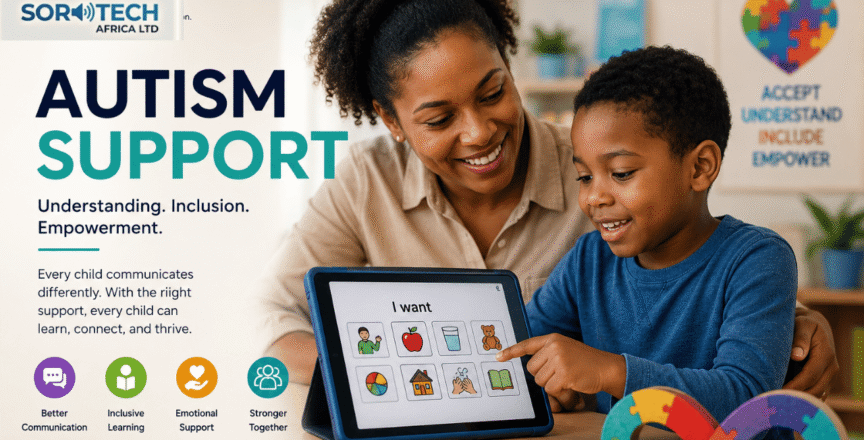
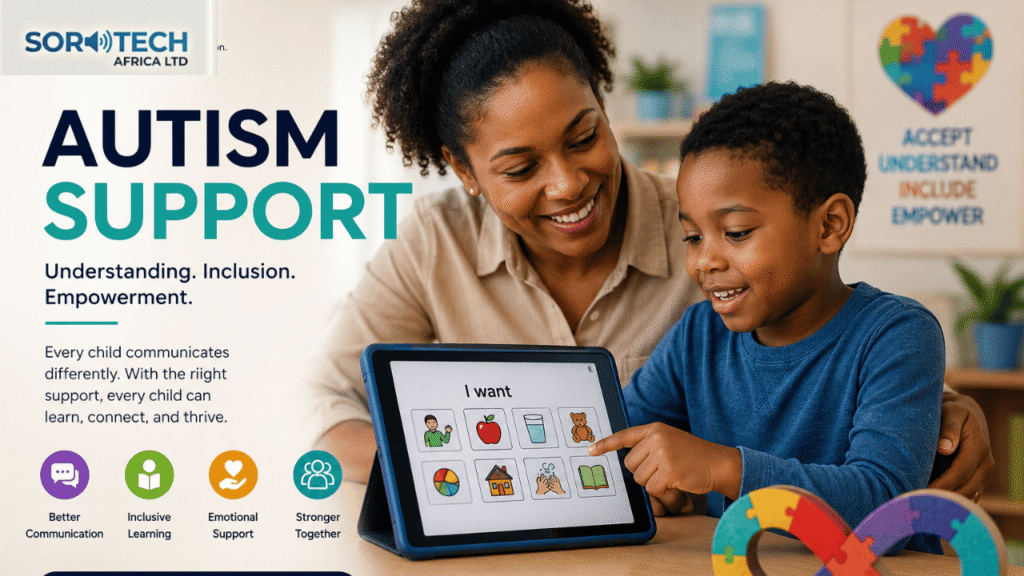
Many autistic individuals process visual information more effectively than spoken language. Visual schedules, symbols, and picture-based communication systems can improve understanding and reduce anxiety.
Speech and Communication Applications
Communication apps can help users express thoughts, needs, and emotions through text, images, symbols, or speech-generation features.
Personalized Learning Platforms
AI-powered learning tools can adapt educational experiences to match individual strengths, learning styles, and communication preferences.
Multilingual Accessibility
In diverse communities, technology can help overcome language barriers and make communication support more accessible to families and educators.
Supporting Autistic Children at Home and School
Creating inclusive environments requires collaboration between families, educators, therapists, and communities.
Here are a few practical ways to support autistic children:
Listen and Observe
Every child communicates differently. Understanding how a child prefers to communicate is the first step toward meaningful support.
Use Clear and Consistent Communication
Simple language, visual supports, and predictable routines can help reduce confusion and build confidence.
Celebrate Strengths
Autistic individuals often possess remarkable talents, creativity, focus, and problem-solving abilities. Support should focus on strengths as much as challenges.
Create Inclusive Learning Environments
Schools can promote inclusion by adapting teaching methods, providing communication supports, and fostering understanding among students.
Encourage Independence
Providing appropriate tools and opportunities allows children to develop confidence and participate more actively in daily life.
The Future of Autism Support
The future of autism support lies in combining human understanding with innovative technology.
Artificial Intelligence, assistive communication tools, and inclusive educational technologies have the potential to make support more accessible, affordable, and effective than ever before.
As technology evolves, the goal should not simply be to create smarter tools—it should be to create more inclusive societies where every individual feels valued, understood, and empowered.
How SoroTech Is Contributing
At SoroTech, we are developing AI-powered communication and learning technologies designed to support individuals with communication challenges, including autistic children.
Our flagship platform, Sòrò, is being built to help bridge communication gaps by combining intelligent speech processing, visual supports, multilingual accessibility, personalized learning assistance, and communication insights.
We believe technology should adapt to people—not the other way around.
Our vision is simple:
A future where no child is left behind because they communicate differently.
Final Thoughts
Autism support begins with understanding, grows through inclusion, and becomes more powerful when supported by accessible technology.
Every child deserves the opportunity to express themselves, build meaningful relationships, access quality education, and participate confidently in the world around them.
By working together—families, educators, communities, and innovators—we can create a future where every voice is heard, every learner is supported, and every child has the opportunity to thrive.
At SoroTech, that future is what we are building every day.
Last modified: June 4, 2026